2026-10-19 ·
Complete Guide to Black water cleanup in Severn, Maryland
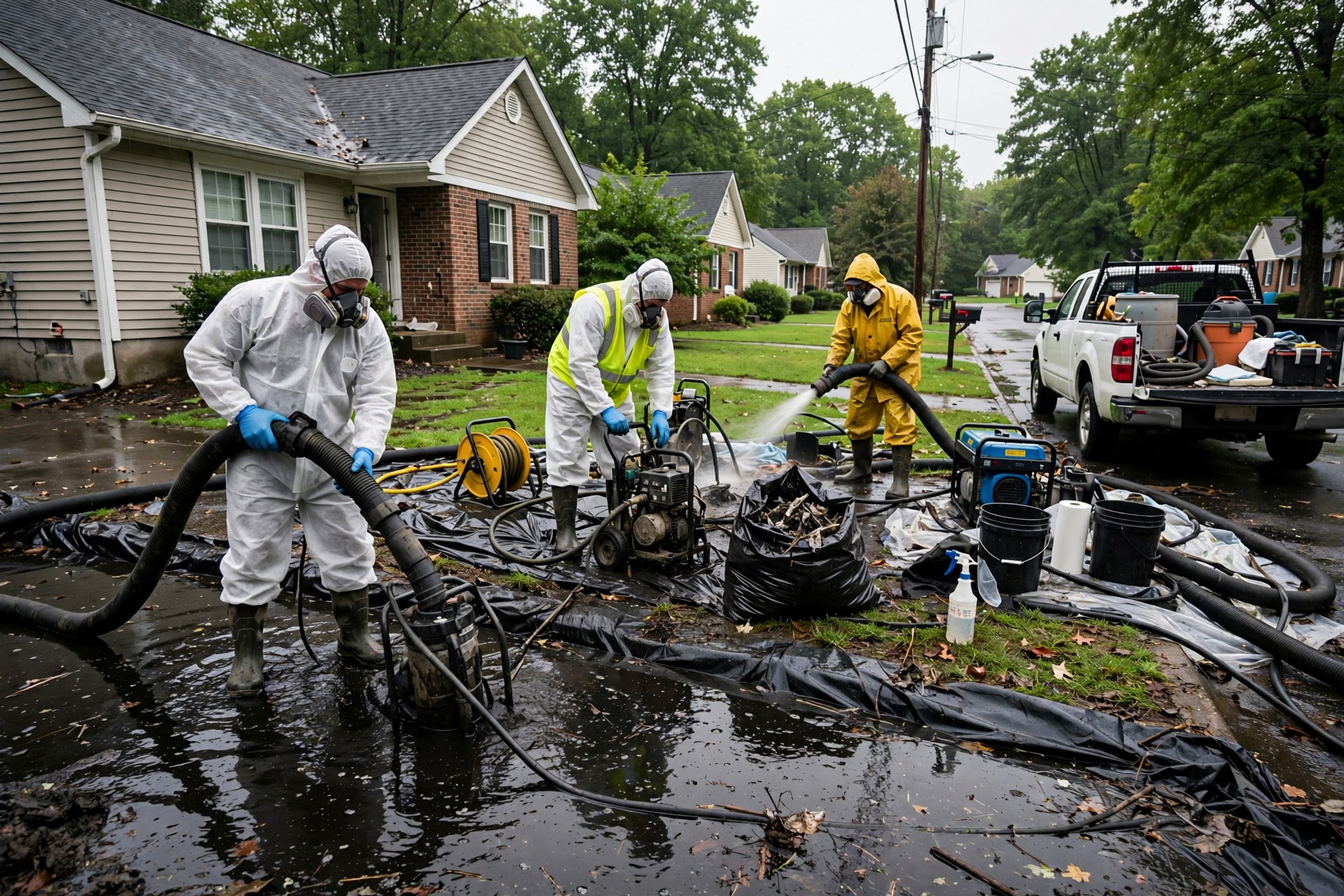
Black water cleanup in Severn, Maryland starts with immediate extraction and usually finishes in 5–10 days once structural drying reaches safe moisture levels. The process addresses Category 3 water from sewage that carries pathogens and requires full containment plus disinfection to prevent cross-contamination in Anne Arundel County homes.
Understanding Black Water in Severn Homes
Black water contains human waste, bacteria, and viruses that demand professional handling beyond standard water removal. In Severn and nearby Odenton, older ranch-style and split-level houses built before 1980 often have cast-iron pipes that corrode and fail during heavy summer storms. These failures send contaminated water into basements and crawl spaces where the humid subtropical climate keeps surfaces damp for weeks. Homeowners notice foul odors, dark staining on concrete, and rapid mold on drywall within 48 hours. The 24/7 Emergency Service team at 8024 Telegraph Rd responds first by isolating the affected zone with plastic sheeting and negative air machines to stop airborne particles from reaching living areas.
Local Climate and Terrain Factors
Anne Arundel County's hot summers and mild winters create distinct challenges for black water jobs. Summer humidity above 70 percent forces crews to run industrial dehumidifiers longer after extraction to reach 12–15 percent moisture content in wood framing. Winter freezes can crack sewer lines under driveways in neighborhoods like Meade Village and Harmans, allowing groundwater to mix with sewage. Flat terrain near Route 3 slows natural drainage, so standing black water soaks deeper into slab foundations common in Severn properties. Crews must remove more saturated insulation and subflooring than in drier regions, increasing the volume of contaminated material that leaves the site.
Step-by-Step Black Water Cleanup Process
Technicians begin with sewage extraction and removal using truck-mounted pumps rated for 200 gallons per minute. Next they apply EPA-registered disinfectants to all hard surfaces and fog HVAC systems. Porous materials like carpet and drywall get bagged and hauled away. Sewage disinfection and sanitization follows with ATP testing to confirm bacterial counts drop below safe thresholds. Finally, structural drying and dehumidification runs until readings stabilize. Each phase includes daily moisture logs shared with the homeowner.
Health Risks and Safety Protocols
Exposure to black water raises risks of E. coli, hepatitis, and norovirus, especially in households with children or elderly residents in Provinces or Stillmeadows. Workers wear full PPE including respirators and dispose of suits on-site. Air scrubbers run continuously during the job to protect adjacent rooms. After cleanup, the team recommends professional HVAC duct cleaning because spores travel through return vents in these single-story homes. Delaying professional response beyond 24 hours often doubles the scope because mold colonies establish on wet framing.
Preventing Future Backups
Regular sewer line inspections every 3–5 years catch corrosion before it reaches the slab in Severn homes. Installing backflow valves helps during heavy rains that overwhelm Glen Burnie and Annapolis treatment plants. Homeowners should keep sump pump discharge lines clear of debris and schedule annual septic tank pumping if they sit on older systems common along Telegraph Road. These steps reduce emergency calls during the wettest months of July and August.