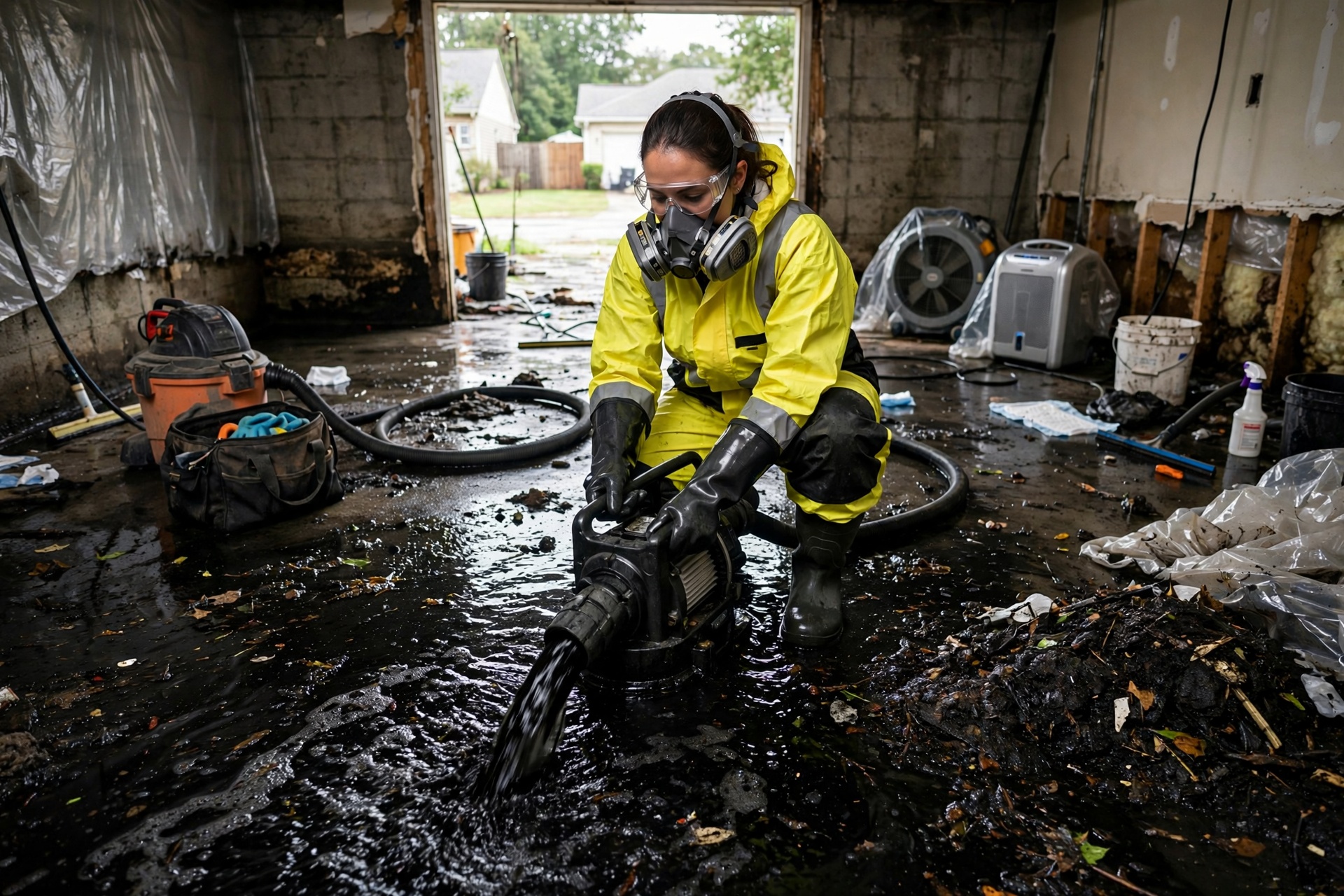
Black water from sewage backups carries pathogens and requires full containment before any extraction begins. In Severn homes built on clay-heavy soil near Telegraph Road, water often pools under slabs and travels into finished basements faster than in newer Odenton developments. Technicians must follow Anne Arundel County health guidelines on disposal and use HEPA air scrubbers to capture airborne contaminants during the drying phase.
Hot humid summers in this region accelerate bacterial growth on drywall and subfloors once Category 3 water enters a structure. Older Severn ranch homes with crawl spaces are especially prone to hidden saturation along foundation walls because the mild winters rarely freeze the ground enough to limit root intrusion into sewer lines. Removal crews cut away affected materials at least 18 inches beyond visible damage to meet Maryland remediation standards.
Glen Burnie and Annapolis residents often see backups after heavy rains overwhelm aging municipal lines that feed into Severn. Proper PPE, negative air machines, and antimicrobial application are non-negotiable steps before any reconstruction. Homeowners should never attempt DIY cleanup because residual bacteria can remain active for weeks in the area's high humidity.
Final clearance testing confirms that surfaces meet safe bacterial levels before occupants return. Crews document every step for insurance carriers serving Anne Arundel County properties.
Technician insight
In Severn the thing that catches most people out with black water cleanup is clay soil that holds moisture against foundation walls long after the rain stops, especially in homes built before 1990 near Route 174. Homeowners often stop at visible water and miss saturation under the slab that keeps bacteria active through our humid summers.
Severn Basement Backup After Storm
Heavy rain overwhelmed the line serving a 1970s ranch on Telegraph Road. Water entered the finished basement and wicked into carpet and drywall on two walls. Crews contained the space, removed the saturated materials, and ran drying equipment for four days until readings met clearance standards.
Black Water Cleanup Services We Offer
✓Sewage Backup Removal From Basements
Extraction and disposal of contaminated water from below-grade spaces common in Severn's older housing stock.
✓Contaminated Drywall and Insulation Removal
Cutting and bagging saturated materials to prevent mold growth accelerated by the region's humid summers.
✓Crawl Space Sewage Decontamination
Treatment of dirt and vapor barriers in homes where poor drainage allows black water to linger under structures.
✓Hard Surface Sanitization After Sewage
Cleaning and disinfecting concrete, tile, and wood floors that absorb odors and bacteria in Anne Arundel County homes.
✓Carpet and Pad Extraction
Removal of flooring that cannot be salvaged after direct contact with sewage in Odenton and Severn residences.
Black Water Cleanup Cost in Severn, MD
| Service | Typical Range | What Affects It |
|---|---|---|
| Initial extraction and containment | $600–$1,400 | Higher when multiple rooms or slab leaks are involved |
| Drywall and insulation removal | $400–$900 | Varies with linear footage and access in older Severn homes |
| Crawl space decontamination | $800–$2,200 | Increases with vapor barrier replacement and ventilation needs |
| Final sanitization and testing | $300–$650 | Includes clearance samples required by some insurers |
Pricing confirmed on-site before work begins. Call 24/7 for immediate dispatch.
How it works
- 1
Emergency Containment
Technicians arrive from the Severn base and set up barriers to stop cross-contamination into unaffected rooms.
- 2
Water Extraction
Industrial pumps and vacuums remove standing black water while monitoring for hidden pockets in slab homes.
- 3
Material Removal
Affected drywall, insulation, and flooring are cut out and disposed of according to local health rules.
- 4
Drying And Sanitizing
Air movers, dehumidifiers, and EPA-registered antimicrobials treat remaining surfaces before clearance testing.
Pricing
Costs depend on square footage affected, depth of saturation, and whether hidden crawl space work is required.