2026-10-19 ·
Complete Guide to Septic backup cleanup in Severn, Maryland
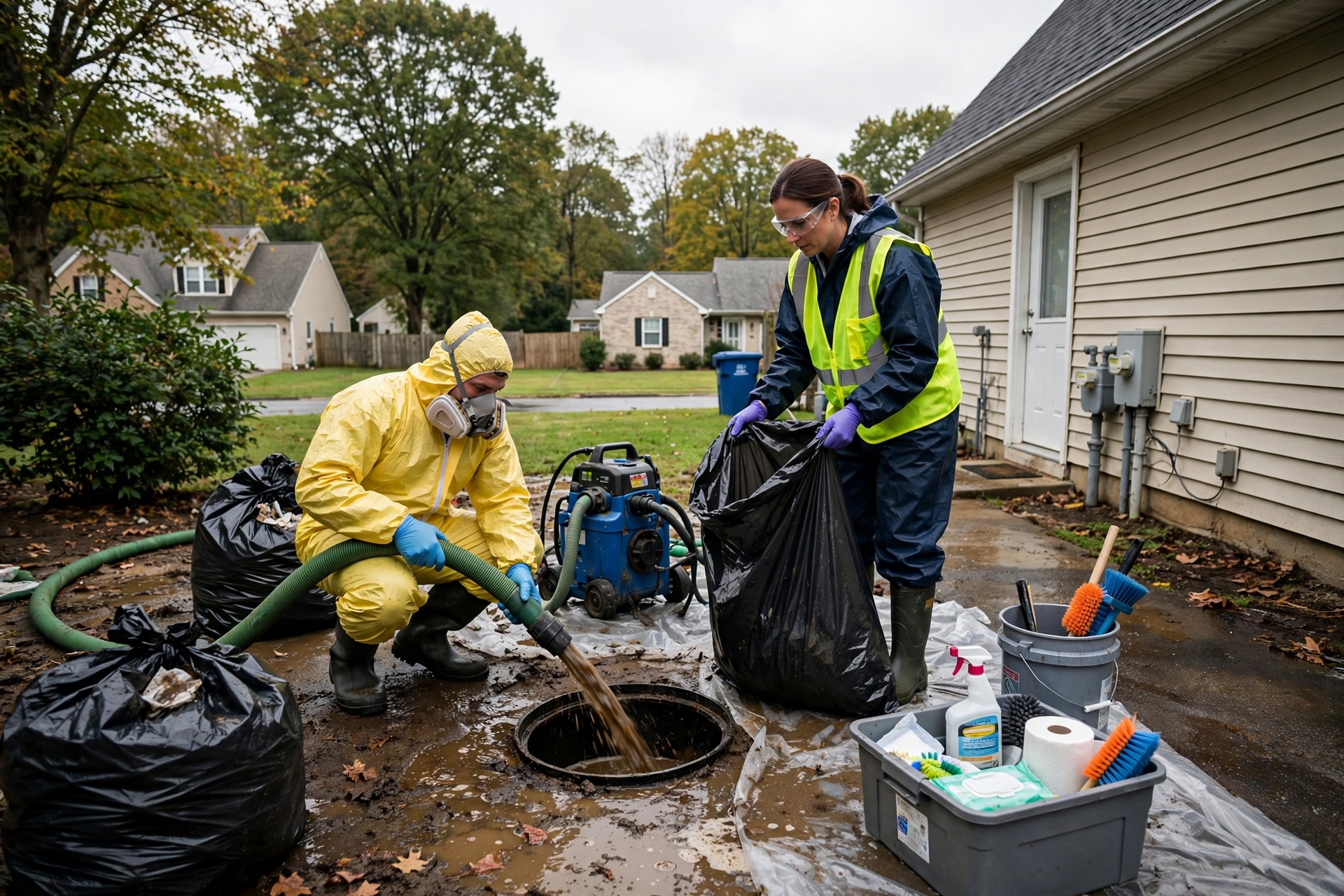
Septic backup cleanup in Severn, Maryland starts with rapid containment and extraction of waste, followed by targeted disinfection of affected surfaces and structural drying to counter the area's humid subtropical climate with hot summers and mild winters that prolong drying times in crawl spaces and basements.
Common Causes of Septic Backup in Severn and Odenton
Homes in Severn and nearby Odenton often sit on older septic systems installed before widespread sewer connections reached Anne Arundel County neighborhoods. Heavy summer rains and occasional winter thaws saturate clay-heavy soils, pushing groundwater into drain fields and forcing backups into basements or crawl spaces. Tree roots from mature oaks common along Telegraph Road invade aging pipes, while grease buildup from household kitchens accelerates clogs in 40- to 60-year-old tanks. Mild winters keep systems active year-round, so seasonal leaf debris and sediment accumulate faster than in colder climates. These factors combine to create backups that require professional sewage extraction and removal rather than simple plunging.
Step-by-Step Septic Backup Cleanup Process
Technicians begin by isolating the affected zone and pumping out standing effluent with truck-mounted equipment rated for black water. Next they remove saturated drywall, insulation, and flooring up to 12 inches above the water line to prevent hidden mold. All surfaces receive EPA-registered disinfectants followed by HEPA air scrubbing. In Severn's humid summers, industrial dehumidifiers run for 3–7 days to bring moisture below 50 percent. Final verification uses moisture meters on concrete slabs and joists. Homeowners in Provinces or Stillmeadows can review the full septic backup cleanup protocol for their specific layout.
Health Risks and Safety Protocols
Raw sewage carries bacteria, viruses, and parasites that thrive in Anne Arundel County's warm, moist environment. Exposure through cuts or inhalation of aerosolized particles can trigger gastrointestinal illness or respiratory issues within 24–48 hours. Crews wear full PPE including respirators and dispose of contaminated materials in sealed containers at approved facilities. Residents must vacate the space until air sampling confirms safe levels. Properties near Glen Burnie or Annapolis often share similar soil conditions, making the same layered approach necessary across the region.
Preventing Future Septic Issues
Schedule tank inspections every 3–5 years and pump when solids reach one-third of tank depth. Route downspouts away from the drain field and avoid parking vehicles over laterals. In Quail Run or Ridgeway, where many homes have limited yard space, install effluent filters to catch solids before they reach the field. Plant only shallow-rooted grasses within 10 feet of the tank. These steps reduce emergency calls during the hot, humid months when backups spread odors quickly through single-story ranch homes typical in the area. For ongoing odor concerns after cleanup, the guide to sewage odor removal outlines follow-up ventilation strategies.
When Professional Help Is Required
Any backup that reaches living areas or contains visible solids demands licensed extraction rather than DIY methods. Signs include gurgling drains, sewage smells near floor drains, or water pooling after heavy rain. Severn Sewage Cleanup Co operates 24/7 Emergency Service from 8024 Telegraph Rd, Severn, MD 21144 and can coordinate with local health department reporting requirements. Early intervention limits damage to subfloors and prevents cross-contamination into HVAC systems common in 1970s–1990s Severn housing stock.